AI personalisation is reshaping how eCommerce brands advertise, replacing broad targeting with real-time decisions based on customer behaviour, creative signals and product data.
What Is AI Personalisation – And Why Does It Matter?
AI personalisation in paid media is the use of machine learning to match audiences, creative, products and timing so each shopper sees the most relevant message in that moment.
eCommerce advertising has never been more competitive. As more brands invest in paid media, standing out in crowded feeds and search results is increasingly difficult.
Today’s consumers expect ads to feel relevant, timely and tailored to their needs – and when they don’t, they scroll straight past.
“AI personalisation is really about respecting the attention of customers. Instead of pushing the same message to everyone – it even sounds silly when you say it like that – brands have a growing ability to respond to what customers actually care about in that moment. The key is for advertising to feel useful rather than intrusive; if that’s true, performance usually follows.”
Sally Hunt, Co-Founder, Floresco Media
AI-powered personalisation is driving this shift. Instead of serving one generic message to thousands of people, brands can use real-time signals – browsing behaviour, purchase history, product feeds and platform data – to shape ads dynamically.
The result is advertising experiences that feel genuinely tailored to each customer.
Personalisation today isn’t a single tool; it’s a combination of smart bidding, dynamic creative, product recommendations and first-party data working together inside platforms like Meta, Google, TikTok and Pinterest.
In this blog, we’ll explore how AI personalisation is reshaping eCommerce advertising, the technology behind it, and practical ways brands can use it to drive more profitable growth.
The Advertising Challenges Facing eCommerce Brands
Many brands we work with face the same core challenge: scaling paid media efficiently has become harder.
Acquisition costs continue to rise as competition intensifies across platforms like Meta and Google. At the same time, campaigns often plateau with audiences becoming saturated by repetitive ads, leading to creative fatigue and declining engagement.
Simply increasing budget no longer guarantees better results; it often highlights inefficiencies.
Add growing uncertainty around attribution and tracking due to privacy changes, modelling, and cross-device fragmentation. And it’s clear why many ecommerce brands struggle to scale spend with confidence while protecting their profitability.
How AI Personalisation is Changing eCommerce Advertising
AI personalisation enables paid media campaigns to adapt based on what a customer has actually done, not on who we assume they are.
Instead of serving the same ads to everyone in a broad audience, platforms like Google, Meta and TikTok automatically prioritise users who have viewed products, engaged with ads or shown clear buying intent.
“The shift isn’t about reaching more people, it’s about understanding people better. When ads respond to real behaviour instead of broad assumptions, budgets naturally flow toward the customers who are most ready to buy.”
Sally Hunt, Co-Founder, Floresco Media
For example, someone who has browsed a specific product category can be shown ads featuring those exact products or close alternatives. At the same time, a returning customer might see new arrivals or complementary items.
Budgets are then pushed towards users who are more likely to convert, based on real-time signals such as product views, repeat visits, purchase history, add-to-carts, video interactions and product availability.
The outcome is more efficient spending, higher-quality traffic, and campaigns that scale by showing the most relevant message to the right users – rather than increasing reach and hoping it converts.
How Meta Andromeda Powers Real-Time Personalisation
Probably the best example today of what we’re talking about here is Andromeda, Meta’s “proprietary machine learning (ML)” ad recommendation architecture.
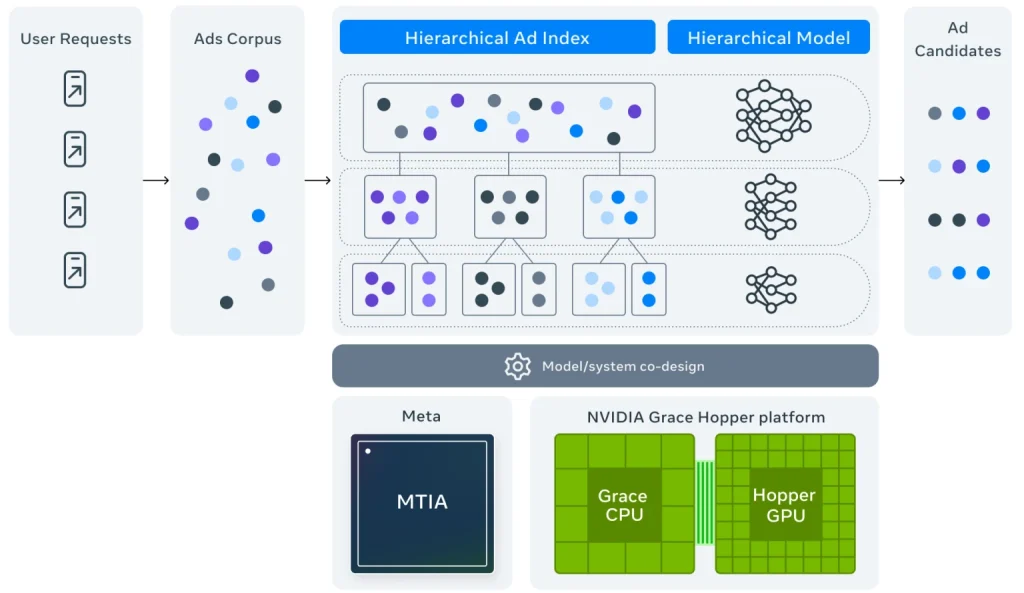
Instead of relying on fixed audiences or rigid campaign rules, Andromeda evaluates signals from users, creative, products, and past performance in real-time to decide which ad should appear in front of which person.
This changes how brands need to think about Meta campaigns. It’s about giving the system the right raw materials: diverse creative, clean product feeds and accurate conversion data. When those inputs are strong, Andromeda can continuously match the most relevant message to the shoppers most likely to buy.
Making AI Personalisation Work in Paid Media
To make AI personalisation effective, brands need to be deliberate about testing, optimisation and monitoring. Here are some actionable steps to get started:
Test dynamic creative, not just static ads: Use personalised product ads that reflect real user behaviour, such as items viewed, cart activity or category interest and commercial signals such as price, availability or promotional status.
Feed AI with creative variety: Launch multiple versions of imagery, copy, concepts and formats so algorithms have enough data to learn and optimise effectively.
Optimise for intent, not just last-click: Focus on predictive signals like browsing behaviour, engagement and likelihood to purchase rather than just the final click.
Monitor creative fatigue: Track frequency and engagement trends to avoid overexposing audiences to the same messaging, which can limit AI performance.
Compare generic vs personalised messaging: Personalised messaging often outperforms broad creative, but testing is still key.
Apply personalisation across channels: Ensure campaigns are consistent across whichever channels you choose to advertise on, rather than treating personalisation as a one-off tactic.
When applied correctly, AI personalisation becomes a system that continuously learns and improves. Brands that feed it the right creative inputs and performance signals are better positioned to scale efficiently while maintaining relevance.
eCommerce AI Personalisation in Action
Here are some practical scenarios showing how AI personalisation drives results. These examples depend on clean product data, strong creative testing and accurate conversion signals.
Abandoned Cart Recovery
A shopper adds a pair of shoes to their cart but leaves the site. AI-powered ads can retarget them with a dynamic ad showing the exact shoes or close alternatives, with incentives set by the brand, such as free shipping. This increases the chance they return and complete the purchase.
Cross-Sell for Returning Customers
A customer previously bought a yoga mat. AI personalisation shows them related items based on their purchase history and browsing behaviour, like yoga blocks, resistance bands or new apparel, keeping the brand top-of-mind while encouraging repeat purchases.
Dynamic Product Recommendations
A fashion brand’s campaign uses AI to automatically show users the products they’ve browsed most recently (or those most likely to convert). For example, someone who looks at summer dresses sees a carousel of those dresses and similar items on Instagram and Facebook, rather than a generic ad for the whole catalogue.
Predictive New Customer Targeting
On TikTok, AI identifies users who are likely to be interested in eco-friendly home products based on content engagement and behavioural signals. Even if they haven’t visited the brand before, they see short-form, native-feeling ads featuring trending products, driving discovery and engagement.
What This Means for eCommerce Growth
The takeaway here is pretty simple: AI personalisation is here to stay. And it has a lot to offer, especially if you know where it adds the most value (and where it does the opposite).
As competition intensifies and tracking becomes less reliable, relevance and efficiency are what separate high-performing campaigns from the rest.
Brands that embrace AI-driven personalisation are better positioned to grow spend profitably while delivering better customer experiences.
If you’re looking to improve performance, reduce wasted spend and future-proof your paid media strategy, now is the time to rethink how personalisation fits into your advertising.
Book a short audit with our paid media team to identify where AI personalisation could unlock growth in your current campaigns.
Photo by Christin Hume on Unsplash